Source 2 in1 wireless safety edge for vehicles, machinery, and theaters
Find 30 verified listings for the 2 in1 wireless safety edge designed for driverless vehicles, theatre construction, and industrial machinery. Compare specifications including IP ratings, materials like EPDM and stainless steel, and customization options to select the right safety solution for your application.
Key considerations
Products List


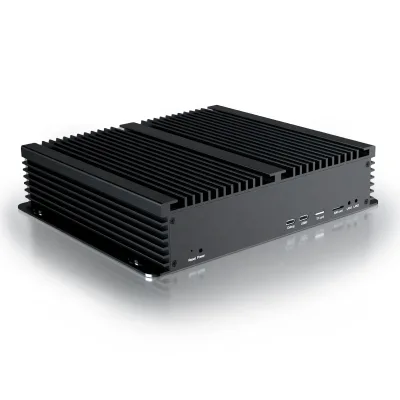
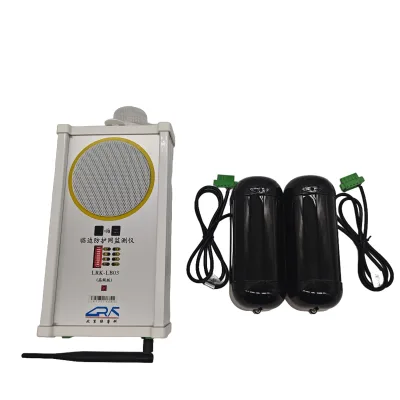
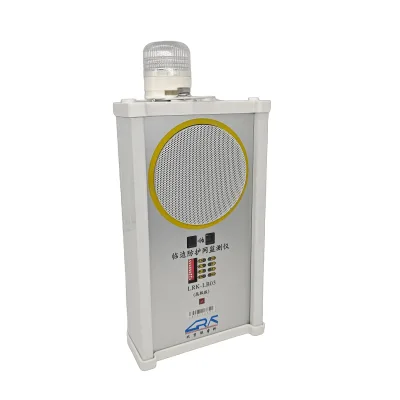
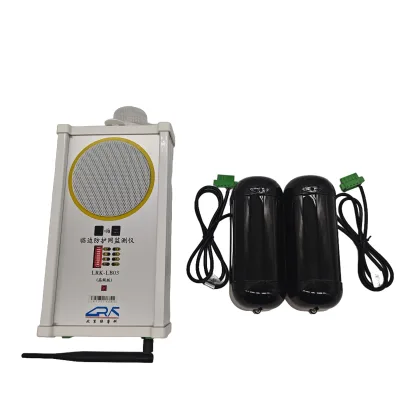


Comprehensive Sourcing Guide
Strategic Sourcing Guide for 2-in-1 Wireless Safety Edge Systems
The industrial landscape increasingly demands integrated safety solutions that minimize wiring complexity while maximizing operational reliability. For buyers researching the "2-in-1 wireless safety edge," the procurement process requires a nuanced understanding of how these devices function within broader automation ecosystems. Unlike traditional hard-wired sensors, these systems often combine detection capabilities with communication modules, though the specific implementation varies significantly by manufacturer. This guide synthesizes available product attributes and industry standards to help buyers navigate the technical, compliance, and commercial aspects of sourcing these critical safety components.
Technical Architecture and Functional Specifications
Understanding the underlying technology is the first step in defining a viable procurement specification. The term "2-in-1" in this context often implies a dual-functionality device, such as a sensor that integrates detection with a specific communication protocol or a mechanical switch combined with an electronic signal output. Based on observed product data, the market offers devices with diverse structural configurations. For instance, some units utilize a "Mechanical Structure Type" component, suggesting a reliance on physical actuation, while others are classified as "Inductive Pressure Sensors" or "Capacitive Pressure Transmitters." This variation indicates that the "2-in-1" label may not refer to a single universal standard but rather a specific combination of features tailored to the application.
The physical dimensions and material composition are critical for integration. Observed specifications include a size of 45*45mm, which serves as a benchmark for compact installations. Material choices range from "Stainless Steel" for harsh environments to "EPDM" (Ethylene Propylene Diene Monomer) for sealing applications, particularly where liquid or chemical exposure is a concern. The "Cross-Section Shape" is noted as "D-Rings" in certain contexts, which may relate to the mounting profile or the shape of the sensing edge itself. Furthermore, the "Wiring Type" is frequently "Two-Wire," a standard configuration that simplifies power and signal transmission in industrial loops. Buyers must verify if the specific "2-in-1" unit they are evaluating supports this standard or requires a more complex wiring architecture, such as those involving a "Controller" and "Aluminium Track" as matching parts.
Compliance, Certification, and Regulatory Standards
In the realm of safety equipment, compliance is not merely a preference but a legal and operational necessity. When sourcing safety edges, buyers must rigorously verify that the product meets recognized international and regional standards. The available data highlights "CE" certification and "ISO 9001" (specifically ISO9001certificate) as common markers of quality assurance. Additionally, some products reference "GB/Ce" standards, indicating compliance with Chinese National Standards alongside European directives. For buyers operating in North America, verifying compliance with "ASTM" standards is equally vital, as these materials and processes are often cited in the product specifications.
The "Production Process" is listed as "Integration," which suggests a manufacturing approach that combines multiple functions into a single unit. This integration must be validated against safety standards to ensure that the wireless communication does not introduce latency or failure modes that compromise safety. The "Standards" field also mentions "ISO9001certificate," which, while primarily a quality management system standard, serves as a proxy for a supplier's commitment to consistent manufacturing processes. Buyers should explicitly request documentation proving that the specific model, such as those in the "Tb; Tbe; Tbf" series or the "XTE" series, has undergone the necessary safety testing to meet the "CE" mark requirements for machinery safety.
Cost Drivers and Pricing Dynamics
The pricing for safety edge systems is highly variable, influenced by the complexity of the "2-in-1" functionality, the materials used, and the level of customization required. The observed price range in the market spans from $1 to $1,220 USD. This wide disparity reflects the difference between basic mechanical switches and sophisticated wireless systems with advanced signal processing. A unit priced at the lower end of the spectrum might be a simple mechanical edge, whereas a unit at the higher end likely includes wireless transmission capabilities, robust sealing (IP ratings), and specialized materials like stainless steel.
Minimum Order Quantity (MOQ) is another significant cost driver. The observed MOQ range is 1 to 1,000 units. For small-scale projects or prototyping, suppliers offering an MOQ of 1 are essential, though the unit cost will likely be higher. Conversely, large-scale industrial deployments can leverage the lower end of the price spectrum by committing to higher volumes, potentially up to 1,000 units. The "Supply" capacity of 200 sets per month is a critical factor for buyers planning large rollouts; it indicates that a single supplier may not be able to fulfill a massive order immediately without a phased delivery plan. Buyers must factor in the "Lead Time," which is observed to be around 30 days, into their project schedules and budgeting.
Typical Applications and Operational Environments
The versatility of the 2-in-1 wireless safety edge is evident in its diverse application profile. The data indicates usage in "Medical Technology and Mechanical Engineering," where precision and hygiene are paramount. In these settings, the "IP Rating" and "Material" (such as EPDM or Stainless Steel) are crucial for withstanding cleaning agents and maintaining a sterile environment. The "Effect" of having a "Hole with Seal" suggests designs that prevent fluid ingress, a common requirement in medical and food processing machinery.
Beyond medical applications, these devices are deployed in "Driverless Vehicles and Theatre Construction." In the context of driverless vehicles, the wireless capability allows for flexible installation without the clutter of extensive cabling, which is vital for moving platforms. In theatre construction, the "Safety Edge" protects personnel during the movement of heavy stage machinery. The "Use" category explicitly lists "Safety Edge," confirming the primary function. Additionally, applications in "Vehicle, Household Appliance, Electronic Product, Machinery, and Industrial Component" sectors highlight the broad utility of these sensors. The "Operation Pressure" is noted as "Atmospheric Pressure," which is typical for general industrial safety edges, though buyers should verify if specific models handle higher pressures for heavy-duty industrial environments.
Supplier Evaluation and Quality Assurance
Selecting a reliable supplier is as important as selecting the right product. The "Location" of the supplier, observed as "Hebei China," provides a geographical context for logistics and potential supply chain risks. Buyers should evaluate suppliers based on their "Production Process" and "Certification" status. A supplier claiming "Integration" as their process should demonstrate a robust quality control system, ideally backed by ISO 9001 certification. The "Advantage" of "Innovative Design" and "Raction Quickly" (likely referring to rapid response times) suggests that suppliers in this sector are competing on agility and technical novelty.
Quality assurance extends to the packaging and shipping methods. The "Pkg" is described as a "Wooden Box" or "Wooden Export Package," which is essential for protecting sensitive electronic components during transit. The "prod_packing" being "According to Your Order" indicates a level of flexibility, but buyers must ensure that the packaging standards meet the specific needs of their logistics partners. When evaluating a supplier, buyers should request evidence of their "Supply" capacity, such as the 200 sets/month figure, to ensure they can meet demand spikes. Furthermore, the "Customization" being "Available" is a key differentiator; buyers should assess the supplier's ability to adapt the "Thread Type" (e.g., ZG) or "Size" to fit unique mounting requirements.
Long-Term Procurement and Maintenance Considerations
Sourcing safety equipment is a long-term commitment that involves maintenance, replacement, and lifecycle management. The "Lead Time" of 30 days is a standard metric that buyers must incorporate into their inventory planning. For critical safety systems, maintaining a buffer stock is advisable to prevent operational downtime in case of sensor failure. The "Matching Part" ecosystem, which includes "Controller," "End Piece," and "Mechanical Switch," must be considered. If a specific model relies on a proprietary controller, the buyer is locked into that supplier's ecosystem for future replacements.
The "Output Signal Type" being "Digital Type" is a forward-looking feature that facilitates integration with modern industrial control systems. However, buyers should verify the compatibility of these digital signals with their existing PLCs or safety controllers. The "Use" of "Safety Edge" implies a critical role in preventing accidents; therefore, the "Advantage" of "Raction Quickly" (rapid response) must be validated through testing. Buyers should also consider the "Material" durability; for instance, EPDM seals degrade over time and may require periodic replacement, whereas stainless steel offers greater longevity. Finally, the "Standard" compliance, such as ASTM or GB/Ce, should be reviewed periodically to ensure that the equipment remains compliant with evolving safety regulations.
Comparative Analysis of Product Attributes
To assist in decision-making, the following table summarizes key attributes observed in the market for 2-in-1 wireless safety edges and related components. This comparison highlights the variability in specifications that buyers must navigate.
| Attribute Category | Observed Options | Procurement Consideration |
|---|---|---|
| Certification | CE, ISO 9001, GB/Ce, ASTM | Verify region-specific compliance (e.g., CE for EU, ASTM for US). |
| Material | Stainless Steel, EPDM, Plastic | Select based on environmental exposure (corrosion, sealing). |
| Size/Dimensions | 45*45mm, 100-5000mm (Length) | Ensure physical fit within the machinery envelope. |
| Wiring/Signal | Two-Wire, Digital Type | Check compatibility with existing control systems. |
| Customization | Available, Customized | Assess if standard models meet specific mounting needs. |
| Packaging | Wooden Box, Wooden Export Package | Confirm protection level for sensitive electronics. |
| Lead Time | 30 Days | Plan inventory and project timelines accordingly. |
| MOQ | 1 - 1000 | Balance unit cost against initial order volume. |
Conclusion
Sourcing a 2-in-1 wireless safety edge requires a balanced approach that weighs technical specifications against compliance requirements and commercial constraints. The market offers a wide array of options, from basic mechanical switches to advanced digital sensors, with prices ranging from $1 to $1,220. Buyers must carefully verify certifications like CE and ISO 9001, ensure the material and IP ratings suit the operating environment, and plan for lead times and MOQs that align with their production schedules. By focusing on the specific attributes of the "2-in-1" functionality and understanding the ecosystem of matching parts, buyers can secure a safety solution that is both compliant and reliable for their specific industrial applications.
FAQs
What certifications are available for 2 in1 wireless safety edge units?
Available certifications include CE, ISO 9001, and GB/Ce standards. Buyers should verify specific model compliance, such as the Tb series, to ensure they meet regional safety regulations for machinery and medical applications.
How long is the lead time for custom 2 in1 wireless safety edge orders?
The standard lead time is approximately 30 days for production. This duration applies to customized units requiring specific thread types or sizes, and buyers should plan inventory buffers accordingly for large deployments.
Which materials are used for 2 in1 wireless safety edge sealing?
Common sealing materials include EPDM and Stainless Steel. EPDM is often used for liquid resistance, while stainless steel provides durability in harsh environments, ensuring the device maintains an effective hole with seal.
Can 2 in1 wireless safety edge systems be customized for specific sizes?
Yes, customization is available for dimensions like 45*45mm or lengths ranging from 100 to 5000mm. Suppliers can adapt the mechanical structure type and wiring to match specific industrial component requirements.
What is the minimum order quantity for 2 in1 wireless safety edge products?
The minimum order quantity ranges from 1 to 1000 units depending on the supplier. Small projects can start with a single unit, while large industrial rollouts may leverage bulk pricing tiers up to the maximum limit.
How is the 2 in1 wireless safety edge packaged for export?
Products are typically packed in wooden boxes or wooden export packages. This packaging protects sensitive electronic components during transit, especially for units originating from Hebei, China, destined for global markets.